Related videos
Specifications
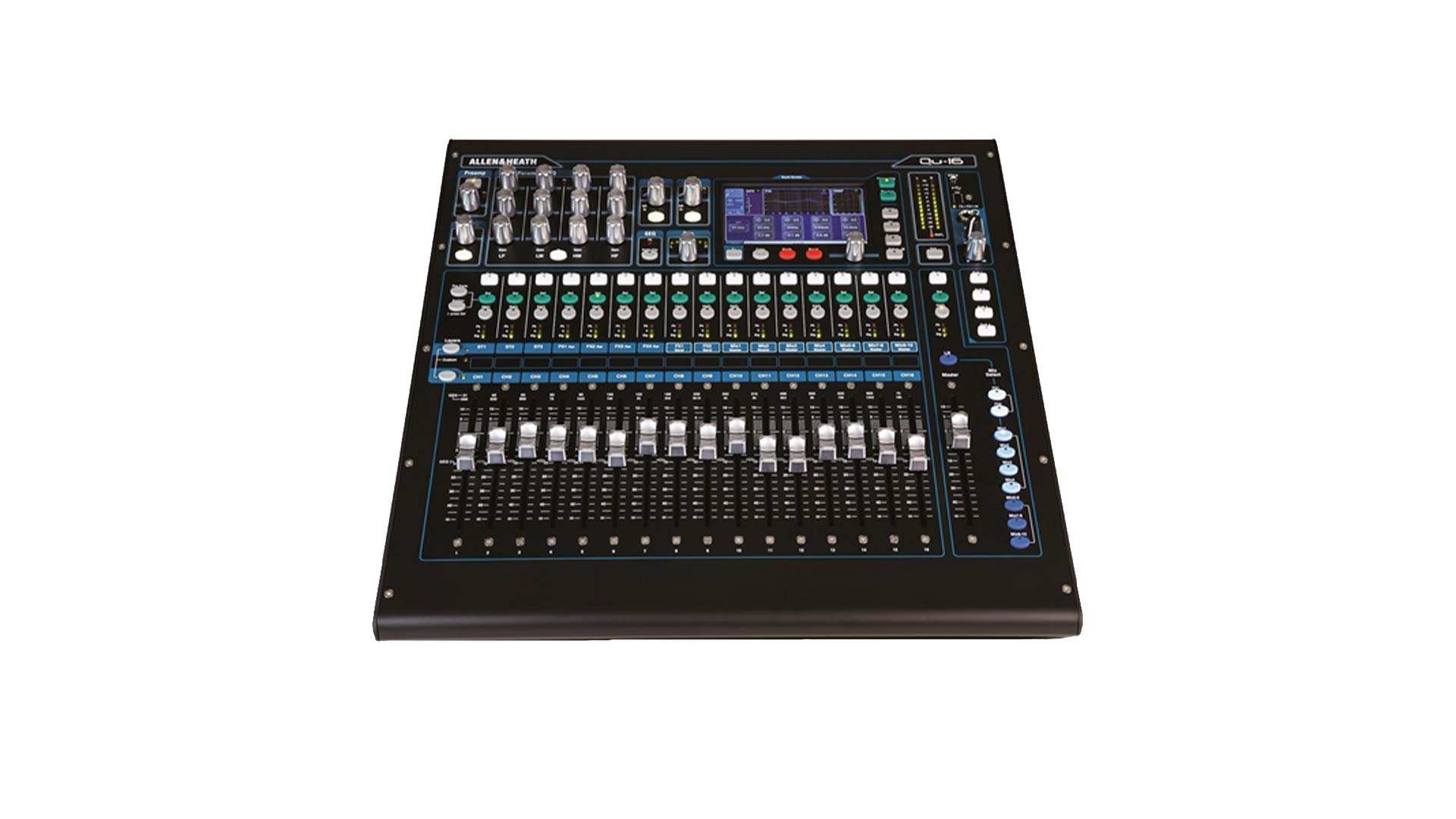
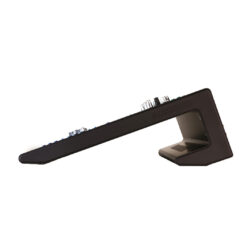
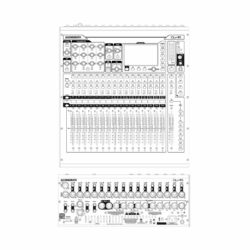
The Allen & Heath QU-16 compact digital audio mixer 22×12 I/O is a compact, rack-mountable mixer with 16 mono and 3 stereo line input channels mixing with 12 mix outputs. The surface includes 17 3-level moving faders, each layer has dedicated keys and indicators, giving access to input channels, output channel mixes, FX sends, FX returns, Main mix, and a customizable layer that gives access to DCA masters and MIDI control, as well as a user-defined channel overview. Each fader strip will have a PAFL, Mix, Select, and Mute button with indicators, a 3-LED multi-point meter, and a colored LED indicating fader assignment. The Allen & Heath QU-16 will have a per-function physical control after the input and output channel selection button, allowing quick access to all key processing parameters. All processing, Pre/Post fade routing, and signal assignment to signals to mix sends, FX sends, and Audio, DCA, and Mute groups. The signal generator is capable of sending a variable level signal to any output mix with visual assignment. The following signal types are available: Sine, White Noise, Pink Noise, and Bandpass. Full metering of inputs, outputs, FX channels, and RTA must be provided on the screen. Real-time analysis measurement includes a spectrogram to enable accurate monitoring of audio energy across the frequency spectrum over time for the purpose of feedback detection and correction of room acoustics. In addition, there is a predefined sub-mix between the network and PAFL. The 12-LED bar meters on the surface indicate the levels of the 3 Main mix buss; The PAFL signal descripts the LR meters accompanied by a PAFL-active indicator.
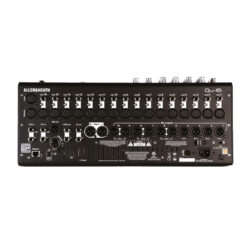
Groups should be accessible and adjusted via a 5″ color touchscreen on the mixing surface. A Channel Ducker must be present to reduce the level of selected channels when a priority input channel is in use. There will be 4 rack-mounted stereo FX engines, 4 DCA groups, and 4 Mute groups. The disconnect point should be adjusted to the following positions in the processing path: Post Preamp, Post HPF, Post Gate, Post Insert return, Post PEQ, Post Compressor, and Post Delay. The direct outputs of the Allen & Heath QU-16 mixer are assignable via the mixer’s soft patch bay to any interface channel or ME channel of the physical output jack. The Allen & Heath QU16 mixing system includes application software for Apple iOS touchscreen devices connected via a wireless network router to the LAN port and allow control of functions such as preamp gain, pad and phantom power. The mixer has a local ‘dSNAKE’ Ethernet audio expansion port with locked Ethercon connector, which provides up to 22 input signals and 12 output signals, as well as 40 personal mix sends to be connected over a single ‘digital snake’ cable and allows remote control of the preamp to an Allen & Heath AudioRack or Allen & Heath ME personal mixing systems. The recommended operating temperature for Allen QU16 is between 5 and 35 degrees Celsius.
| Weight |
13,5 kg |
| Dimensions |
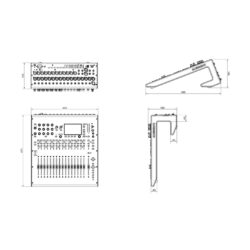
44 x 50 x 18,6 cm (desk-mounted)
48,3 x 47,2 x 19 cm (rack-mounted) |
| Input |
Mic/Line inputs: Balanced, XLR and 1/4’ TRS jack, fully recallable
Input Sensitivity (XLR /TRS): -60 to +5dBu / -50 to +15dBu
Analogue Gain: 5 to +60 dB, in 1 dB increments
Maximum input level (XLR / TRS): +19dBu / +29dBu
Input impedance (XLR /TRS): >5kΩ / >10 kΩ
THD+N, unity gain 0dB: 0.0005% -89 dBu (20-20kHz, direct output @0dBu 1kHz)
THD+N, average gain +30dB: 0.001% -83dBu (20-20kHz, Direct Output @0dBu 1kHz)
ST1, ST2 connector: Balanced, 1/4’ TRS jack, semi-normalised
ST3 connector: 3.5mm stereo mini jack, unbalanced
Input sensitivity (ST1,ST2 / ST3) Nominal +4dBu / 0dBuv
Trim: +/-24dB
Maximum Input Level (ST1,ST2 / ST3): +22dBu / +18dBu
Input Impedance: >7kΩ |
| Output |
Mix1-10 and LR Out: Balanced, XLR
Output impedance: <75Ω
Nominal output: +4dBu = 0dB meter reading
Maximum output level: +22dBu
Residual output noise: -90dBu (quiet, 20-20kHz)
Stereo output Alt and 2Trk: Balanced, 1/4 TRS jack
Source (Alt output /2Trk output): Patchable / LR post-fade
Output impedance: <75Ω
Nominal output: +4dBu = 0dB meter reading
Maximum output level: +22dBu
Residual output noise: 90dBu (quiet, 20-20kHz)
AES digital output: 2 channels, 48kHz sampling rate, XLR |
| System |
Balanced measurement from XLR input to XLR output, 0dB gain, 0dBu input
Dynamic range: 112 dB
Frequency response: +0/-0.5 dB from 20Hz to 20kHz
Headroom: +18dB
Internal operating level: 0dBu
dBFS alignment: +18dBu = 0dBFS (+22dBu at XLR output)
Meter calibration: 0dB meter = -18dBFS (+4dBu at XLR output)
Meter peak indication: -3dBFS (+19dBu at XLR output), multi-point detection
Meter signal indication: -48dBFS (-26dBu at XLR output)
Meter type: Fast response (peak) |
| Control |
Fader: 100mm motorised
Touch Screen Qu-16, 24: 5’ TFT resolution, 800×480
Control keys: 4
Mute groups: 4
DCA groups: 4
Network: Ethernet TCP/IP for MIDI and iPad application |
| Input processing |
CH1-32: Local, dSNAKE or USB
ST1, ST2: Local, dSNAKE or USB
ST3: Local, dSNAKE or USB Stereo
Global USB source: Streaming Qu-Drive or USB B
Stereo connection: Even/odd input pairs
Linked parameters: EQ, dynamics, insert, delay, assignments, sends
Connection options: Preamp, polarity, sidechain, fader/mute, pan
Polarity: Normal/Reverse
High-pass filter: 12dB/octave 20Hz – 2kHz
Insert: Assign FX1-4 to input channels
Delay: Up to 85 ms |
| Mix processing channel direct output to USB |
Follow Fader, Follow Mute (global options)
Source selection (global): Post-Pre-amp, Pre-EQ, Post-EQ, Post-Delay
Insert: Assign FX to mixing channels
Delay: Up to 170 ms |
| Sampling rate |
48kHz +/-100PPM |
| Power supply |
100-240V AC, 50/60Hz |
| Channels |
16 |
| Recording |
12 mix outputs (XLR)(LR, Mono Mix 1-4, Stereo Mix 1-3) |